
 Reading Time: 8 mins #
 This post may contain affiliate links.
Empower your Team with The D.O.R.E. System
The D.O.R.E. System is the key to balancing empowerment and quality control in leadership. Micromanagement may seem like the safest route, but it stifles creativity, drains motivation, and increases turnover. Instead of hovering over every detail, leaders can use a structured approach that fosters trust and autonomy.
The Leadership Tightrope: Balancing Control & Empowerment
Work was so much easier when the term “micromanagement” didn’t exist. Back then, trust flowed freely, and decisions felt collaborative. Today, leaders walk a tightrope between empowering their teams and ensuring quality. The pendulum swings both ways—let go too far, and chaos reigns. Micromanage every step, and watch creativity and motivation plummet.
Why Letting Go Feels Like a Leap of Faith
Relinquishing control can feel like bungee jumping without a cord—exhilarating for some and terrifying for most. As a leader, you’ve built a dream team and perfected your processes. The idea of someone else disrupting that system can be nerve-wracking. But here’s the harsh reality:
- Micromanagement isn’t just frustrating—it’s a productivity killer.
- It erodes trust and fuels high turnover rates.
The Real Reason Leaders Struggle to Let Go
The key lies in finding balance. We can nurture engaged, high-performing teams without resorting to micromanagement. Here’s the truth:
- You’re not just a control freak—you’re a detail-oriented leader who cares deeply about quality and efficiency.
- Micromanagement often stems from a fear of failure, lack of trust, or perfectionism that would make Michelangelo blush.
The D.O.R.E. System provides a proven framework to help leaders transition from micromanager to mentor, creating an environment of trust, accountability, and growth.
“The greatest glory in living lies not in never falling, but in rising every time we fall.” Nelson Mandela
The Problem with Micromanaging
Here’s the thing: micromanagement reflects a “fixed mindset” and it is an essential element to empower your team. You believe your team’s skills are set in stone, like a prehistoric carving. Think of it this way: micromanaging is like constantly adjusting the handlebars on your team’s bikes – they can never learn to ride independently.
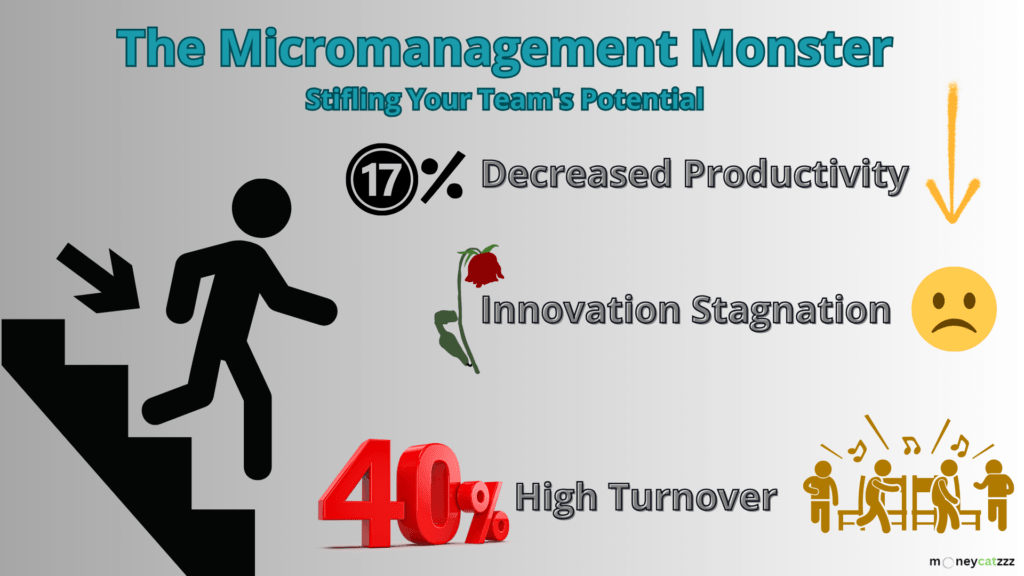
[“Micromanagement Makes Your Wallet Cry” – moneycatzzz.com]
The Data Doesn’t Lie: Micromanagement Makes Your Wallet Cry
Let’s get real: micromanagement has a hefty price tag on your team’s morale and bottom line. Consider this:
- Decreased Productivity: A study by Gallup found that micromanaged employees are 17% less productive. That’s a significant chunk of change flying out the window!
- Innovation Stagnation: Micromanagement stifles creativity. Imagine Picasso with a hall monitor constantly critiquing his brushstrokes. Not a recipe for masterpieces, is it?
- High Turnover: Feeling like a cog in the machine? That’s how micromanaged employees feel. A study by Robert Half found that 40% of employees would leave a job due to a micromanaging boss. Yikes!

[“Micromanaging Picasso” – Photo by JOE Planas on Unsplash (Retouched)]
The D.O.R.E. System: Your Micromanagement Survival Guide (Without the Micromanaging!)
Okay, letting go completely can feel like jumping off a cliff blindfolded. But fear not, control-loving leader! The D.O.R.E. system is here to help you transition to a more empowering leadership style.
Delegate (With Training Wheels):
This isn’t a free-for-all! Consider delegation a trial run. Assign smaller, well-defined tasks to build trust and assess your team’s capabilities. Think of yourself as a supportive coach, providing clear instructions and expectations. Remember, letting go doesn’t mean letting loose. Like a parent teaching their child to ride a bike, you offer initial guidance but gradually loosen your grip as they gain confidence.
Oversee (Discreetly, Like a Ninja):
Micromanagers often transform into helicopter parents, hovering overhead and stifling independence. Here’s the antidote: schedule regular check-ins to offer support and guidance without micromanaging every step. Think of yourself as a safety net, there to catch them if they fall, but not hovering over their every move. This allows you to monitor progress without suffocating creativity.
Recognize and Reward (Selectively, But Publicly):
Celebrate successes, big and small! But here’s the twist: use recognition as a tool to reinforce desired behaviors. Acknowledge their progress towards independence, not just the final outcome. A public shout-out in a team meeting goes a long way! This motivates your team and shows them that you value their efforts.
Evaluate (With Empathy, Not a Red Pen):
Nobody enjoys a red-pen massacre. Offer constructive feedback that focuses on helping them grow, not nitpicking every minor mistake. Remember, they’re still learning to fly solo! Approach feedback with empathy and focus on areas for improvement, fostering a learning environment where mistakes are seen as opportunities to evolve.

The D.O.R.E. System in Action
Let’s see this in action! Imagine Mary, a marketing manager who used to review every draft her team wrote, stifling their creativity. She implemented the D.O.R.E. system by starting with smaller tasks. She delegated a blog post to a junior writer, providing clear guidelines and expectations (Delegate). She then scheduled regular check-ins to offer support without hovering (Oversee). When the post was successful, Mary publicly acknowledged the writer’s contribution, highlighting their progress towards independent work (Recognize & Reward). Finally, she provided constructive feedback focused on helping the writer grow (Evaluate).
The D.O.R.E. system empowered Mary’s team. The writer felt trusted and valued, leading to increased creativity and ownership. The team’s overall productivity soared, and Mary freed from micromanaging minutiae, could focus on strategic initiatives.
This is just one example. The D.O.R.E. system can be applied across various situations. By embracing delegation, discreet oversight, selective recognition, and empathetic evaluation, you can transform from a micromanager into a mentor, fostering a thriving and empowered team.
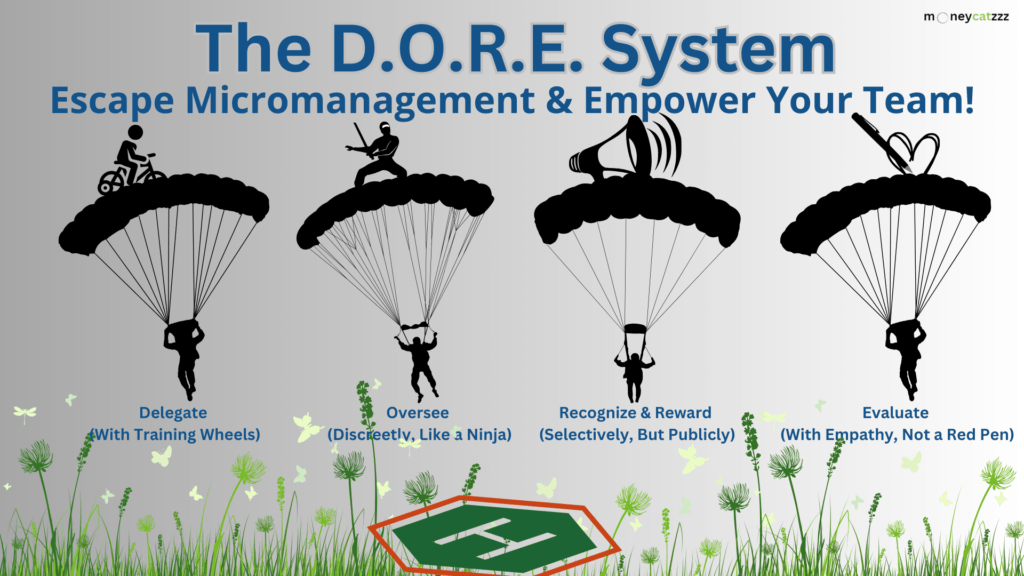
[“The D.O.R.E. System: The Micromanagement Survival Guide” – moneycatzzz.com]
Building Trust: The Bridge Between Control and Calm Leadership
Micromanagement erodes trust, the cornerstone of any healthy team. Trust allows team members to take ownership, experiment with ideas, and learn from mistakes. Building trust starts with clear communication, setting realistic expectations, and providing consistent, constructive feedback.
Emotional Intelligence (E.Q.): Your Secret Weapon
In their book Emotional Intelligence 2.0, Travis Bradberry and Jean Greaves explain that leaders with high I.Q.s are adept at self-awareness. Recognizing your micromanagement tendencies is the first step towards building trust and delegating effectively.
Empowerment (on Your Terms, Not Theirs)
Micromanagement assumes your team is incapable, but here’s the secret: you hired them for a reason! Brené Brown, in her book Dare to Lead, emphasizes the importance of vulnerability in leadership. Empowerment doesn’t mean throwing them into the deep end with sharks circling – it’s about creating a safe space for them to learn and grow within a defined framework.
Think of it like a rock climbing gym: You provide the initial safety equipment and guidance, but the goal is for them to eventually ascend the wall independently, conquering challenges and celebrating their victories.
Here’s how to empower your team “on your terms“:
- Invest in Skill Development: Upskilling your team isn’t just good for them; it increases your confidence in their abilities. Provide training opportunities, workshops, and conferences to equip them with the tools they need to excel. A well-trained team is less likely to require constant supervision, freeing you to focus on strategic initiatives.
- Embrace Diverse Perspectives (But Don’t Let the Monkeys Wrench the Whole Engine): Be bold and leverage your team’s unique strengths. Encourage open communication within a defined framework to ensure ideas align with your vision. Imagine a symphony orchestra – each instrument has its own part to play, but they create a harmonious masterpiece under the conductor’s guidance.
- Provide Ownership (With Guide Rails, Not Just Guard Dogs): Assign projects that provide a sense of ownership while maintaining a degree of control. Break down larger projects into smaller, more manageable tasks with clear milestones. This allows you to monitor progress without micromanaging every step. Think of it like training wheels on a bike – you provide the initial support and structure, but the goal is to eventually remove them and watch them ride independently.
The “Calm Captain”: Effective Oversight Without the Micromanagement Mishap
The ideal leader is something other than a drill sergeant barking orders. The “Calm Captain” strikes a balance, providing close supervision while fostering a sense of control:
- Set Clear Expectations (and Stick to Them Like Glue): Outline goals, deadlines, and performance metrics, ensuring everyone is on the same page. Transparency builds trust and empowers your team to make informed decisions within the established framework.
- Ongoing Coaching and Mentorship (But Not Hovering Like a Helicopter): Invest in your team’s growth by providing regular feedback and coaching sessions, but avoid hovering. Think of yourself as a wise mentor, offering guidance and encouragement without dictating every move.
- Celebrate Successes (Selectively, But Like They Won the Lottery): Recognizing achievements is a powerful motivator. Publicly acknowledge successes that reinforce desired behaviors and demonstrate progress towards independent work. A heartfelt celebration goes a long way in boosting morale and fostering a sense of accomplishment.
- Open Communication (With Designated Channels, Not a Chatroom Free-for-All): Foster a culture of open communication where team members feel comfortable sharing ideas, concerns, and feedback – within designated channels. This allows for early identification of challenges and facilitates course correction without derailing your established procedures.

[“Calm Captain is onboard” – moneycatzzz.com]
From Control Freak to Calm Captain – A Journey of Calculated Trust
Micromanagement might provide a false sense of control but ultimately hinders you and your team. By embracing delegation (with training wheels), building trust, and empowering your team (on your terms), you can transform from a control freak into a “Calm Captain.” Remember, the best leaders inspire and guide their team to victory but don’t dictate every move.
From Control Freak to Calm Captain – A Journey of Calculated Trust
Micromanagement might provide a false sense of control but ultimately hinders you and your team. By clinging to every detail, you stifle creativity, decrease motivation, and create a revolving door of frustrated employees. The good news? There’s a better way.
The D.O.R.E. system empowers you to delegate confidently, oversee discreetly, celebrate progress, and offer constructive feedback that fosters growth. It’s about calculated trust – gradually loosening the reins as your team builds confidence and ownership.
This journey won’t happen overnight. It requires commitment, self-awareness, and a willingness to let go. Remember, the most outstanding leaders aren’t control freaks but “Calm Captains” who guide their teams to victory without dictating every move.

Ready to transform your leadership style?
- Download our free “Calm Captain Checklist.” This handy guide summarizes the D.O.R.E. system and provides practical tips for implementation.
- Identify one micromanaging habit you’ll relinquish this week. It could be anything from letting go of a daily status update to trusting your team members to handle a small, well-defined project.
- Schedule a team meeting to discuss your commitment to a more empowering leadership style. Explain the D.O.R.E. system and solicit their feedback. Open communication is key to building trust and fostering a collaborative environment.
- Celebrate successes (both big and small) along the way. Public recognition reinforces positive behavior and motivates your team to strive for excellence.
- Embrace the journey. There will be bumps along the road, but with consistent effort and a commitment to calculated trust, you’ll witness your team blossom under your “Calm Captain” approach.
Take action today! Implement these strategies, loosen your grip (a little at a time!), and watch your leadership style transform. You might surprise yourself with the results, and more importantly, your team will thrive under a culture of empowerment and trust.
Disclosure: This post may contain affiliate links. We only recommend products we believe in, and We may receive a commission at no cost to you! Thanks for your support!”
Acknowledgement: Cover Image by Pixabay.com (Retouched)
Signup to our Newsletter for regular updates:
Disclaimer: The information is provided for general information only – moneycatzzz.com makes no representations or warranties in relation to the information, including but not limited to any representation or warranty as to the fitness for any particular purpose of the information to the fullest extent permitted by law. While every effort has been made to ensure that the information provided in this article is accurate, reliable, and complete as of the time of writing, the information provided in this article should not be relied upon to make any financial, investment, real estate or legal decisions. Additionally, the information should not substitute advice from a trained professional who can take into account your personal facts and circumstances, and we accept no liability if you use the information to form decisions.