 Reading Time: 8 mins #
 This post may contain affiliate links.
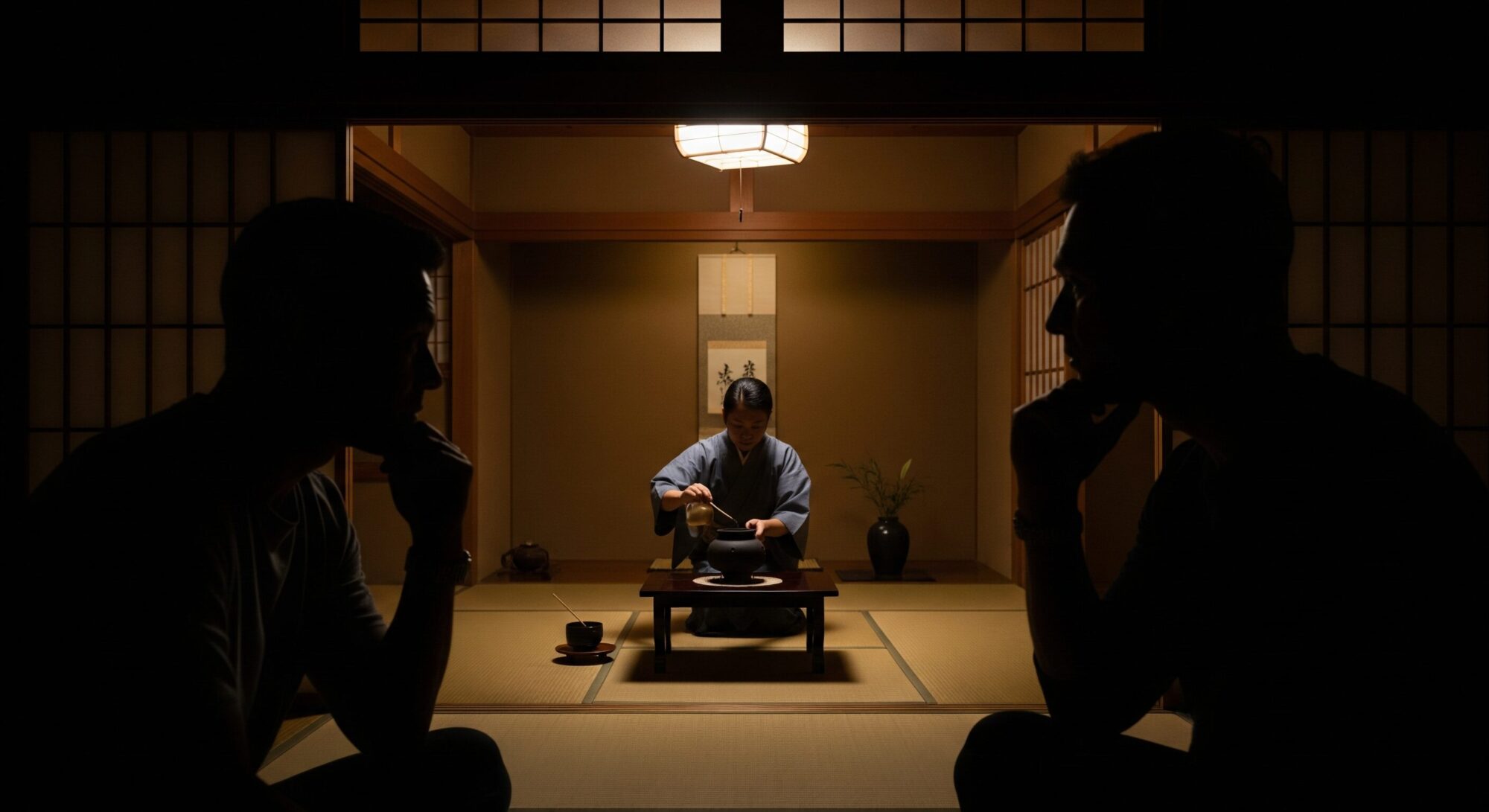
I arrived at the tea house in Kyoto with three phones. Three. One for work, one for personal use, and one for international clients. Even in the taxi, I was typing, scheduling, optimizing. I had given myself exactly ninety minutes for this “cultural experience” before my next meeting. I knew nothing about how to stop rushing through life because I believed stopping was synonymous with falling behind.
The tea master, Tanaka-san, met me at the entrance. He was perhaps seventy, moving with the deliberate slowness of someone who had nowhere else to be. He looked at my phone, still buzzing in my hands.
“Please,” he said, gesturing to a small wooden box. “They will wait.”
I almost laughed. Nothing in my life waited. That was the point: to stay ahead of everything waiting to devour my time.
But I placed the phones in the box. The silence was immediate and uncomfortable.
“Good,” he said. “Now we can begin to arrive.“
Begin to arrive. I had been there for five minutes already. I did not understand that arrival, in the Japanese tea ceremony, had nothing to do with your body’s location.
The Tyranny of Perpetual Motion
Before Kyoto, I was a man who ate breakfast while walking to the subway, who scheduled calls during lunch, who fell asleep to podcasts on 1.5x speed. Efficiency was my religion. Time was my enemy.
I had built a life that required constant motion to maintain. Like a shark that dies if it stops swimming, I believed stillness would destroy everything I’d constructed. My productivity anxiety manifested as a chest-tightening panic whenever I wasn’t actively producing something.
The breaking point came during what should have been a vacation. Costa Rica. Beautiful beach. Hammock between two palms. I lasted eleven minutes before opening my laptop. My girlfriend at the time watched me typing frantically in paradise and said, “What are you running from?“
I said, “I’m not running from anything. I’m running toward success.“
She said, “They look the same from here.“
Three weeks later, she left. The note said: “I can’t compete with your urgency.“
The Garden Path: Where Rushing Dies
Tanaka-san led me through the tea garden along a path of irregular stones. I walked at my usual pace — efficient and direct. He stopped me with a gentle hand.
“Each stone,” he said, “is placed to slow you. Look, they are different sizes, different heights. You cannot rush without stumbling.“
He was right. The path forced attention. Each step required presence. This was my first lesson: sometimes the environment must teach what the mind refuses to learn.
“This is called roji (露地),” he explained. “The dewy path. It is designed to separate you from the outside world. But separation takes time.“
We walked for perhaps fifty feet. It took ten minutes. By the end, my breathing had changed. The frantic energy that usually propelled me had nowhere to go.
“Better,” Tanaka-san said. “Now you are walking not escaping.“
Ichigo Ichie: The Meaning Hidden in Transience
Inside the tea house, Tanaka-san began preparing the implements. Every movement was choreographed yet natural. He cleaned tools that were already clean. He examined the tea bowl from multiple angles. He folded a small cloth with the precision of an origami expert.
“Why so slow?” I asked, my impatience barely concealed.
He paused, considered. “Do you know the meaning of ichigo ichie?” I shook my head.
“One time, one meeting,” he translated. “This exact moment, you and I, this light, this temperature, this heartbeat, will never exist again. Why would you rush through something that will never repeat?“
The phrase hit me unexpectedly. I thought of all the moments I’d rushed through, treated as obstacles between me and some future achievement. On my first days at a job, I’d immediately try to leave — dinners with my parents where I’d checked my phone under the table. Entire relationships I’d fast-forwarded through, always focused on some better thing ahead.
“In the West,” Tanaka-san continued, arranging charcoal with metal chopsticks, “you have the phrase ‘killing time.‘ Very strange to us. Time is not an enemy to defeat. It is a gift to receive.”
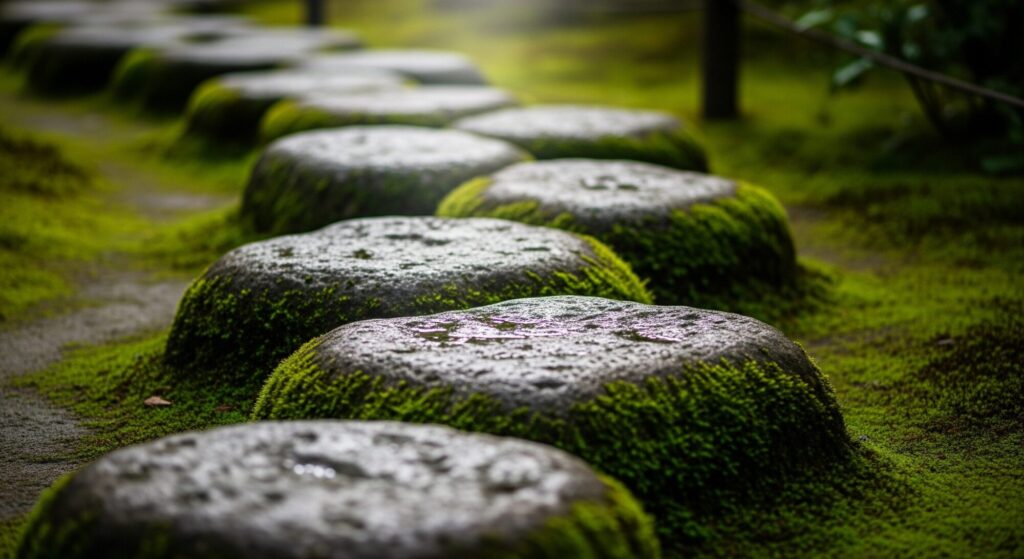
“The Garden Path” – Image by AI]
The Ritual: When Slowness Becomes Revolution
The actual Japanese tea ceremony unfolded like a slow-motion film.
Tanaka-san’s movements had the quality of a tai chi master: continuous, flowing, never hurried yet never static.
He purified the water scoop.
He cleaned the tea container.
He examined the bamboo whisk.
He folded and refolded the silk cloth.
Each action could have been done in seconds. Each took minutes.
“This is called temae (点前),” he explained. “The procedure. Some see it as rigid. But rigidity and ritual are different. Rigidity fears. Ritual honors.“
I watched him prepare the matcha: two careful scoops of emerald powder, a ladle of hot water, the whisking that created foam like green sea spray. The sound was hypnotic. Shh-shh-shh. No other noise existed.
When he finally handed me the bowl, forty minutes had passed, forty minutes to make one cup of tea.
“Now,” he said. “You drink in three and a half sips. Slowly.”
The tea was bitter, earthy, somehow both empty and full. But the taste wasn’t the point. The point was the forty minutes of watching, waiting, surrendering to a timeline not my own.
The Productivity Paradox
In his book In Praise of Slowness, Carl Honoré writes: “The great benefit of slowing down is reclaiming the time and tranquility to make meaningful connections: with people, with culture, with work, with nature, and with our own bodies and minds.“
Sitting in that tea house, I did not expect how deeply I would feel the truth of this. My entire life had been built on the opposite premise, that meaning came from speed, from doing more faster.
But Tanaka-san’s movements held more intention in one gesture than my entire day of frantic activity. His pouring of water contained more presence than my seventeen back-to-back meetings.
“In business,” he said, reading my thoughts, “you have the term ‘productivity.‘ Very interesting word. Produce-activity. Making and doing. But what about receptivity? What about receive-activity?“
He was right. I had no framework for receiving, only for producing, pushing, and performing.
Mindful Rituals: The Antidote to Urgency
“Every morning,” Tanaka-san told me, “I perform an abbreviated ceremony. Just for myself. Twenty minutes. No guests. This is how I remember who I am before I remember what I must do.”
This concept, mindful rituals for anxiety, was foreign to me. My morning ritual involved checking emails before my feet hit the floor, mainlining coffee while scanning the news, and creating mental lists of everything already behind schedule.
“You have confused busy with important,” he observed. “But busy is just noise. Important to be quiet.“
He taught me a simple practice: preparing tea with full attention. Not a ceremony, just careful preparation. Warming the cup first. Watching steam rise. Holding the cup with both hands and feeling the heat through the ceramic.
“This is a checkpoint,” he said. “Moment where rushing stops. Because you cannot rush hot tea, it will burn you. So you must match its pace, not demand it match yours.“

Lorem ipsum dolor sit amet, consectetur adipiscing elit. Ut elit tellus, luctus nec ullamcorper mattis, pulvinar dapibus leo.
The Return: Implementing Strategic Slowness
Back in New York, I kept the practice. Every morning, I make tea. Not the whole ceremony, I’m not pretending that transformation was that complete. But slowly. Deliberately. With what Tanaka-san called “respectful attention.“
The first week, my hands shook with the effort of not multitasking. The second week, I found myself checking my phone less. By the third week, those twenty minutes had become sacred, the one part of my day that belonged entirely to me.
How to stop rushing through life isn’t about moving in slow motion through everything. It’s about choosing moments of deliberate presence that anchor you in the present. It’s about understanding that speed is not efficiency if it destroys quality, relationships, and peace.
My colleagues noticed the change. “You seem… calmer,” one said, suspicious. In our culture, calm is often mistaken for complacency.
But I had learned what Tanaka-san knew: the person who moves deliberately arrives more fully than the one who rushes. The executive who can sit still for forty minutes possesses more power than the one who cannot stop moving for four.
What the Tea Ceremony Continues to Teach
Productivity anxiety still visits. The old voices still whisper about falling behind, about competitors gaining ground while I sit with my tea. But now I recognize these voices for what they are: fear dressed as wisdom.
The ichigo ichie meaning has become my response: This moment will never come again. This conversation. This sunrise. This breath. Why would I rush through something irreplaceable?
I returned to Kyoto last month. Tanaka-san remembered me, “Three-phone man,” he said, smiling. This time, I had only one phone. And I turned it off before he asked.
We performed the ceremony again. The same movements. The same tea. But everything was different because I was different. I could see the beauty in the deliberate inefficiency, the profound rebellion of taking exactly as much time as something deserved.
“Better,” he said, watching me drink. “Now you taste the tea, not your thoughts about the tea.“
That’s the secret I learned in that small room in Kyoto: rushing isn’t just about time. It’s about avoidance. When we rush, we avoid feeling, tasting, and being. We prevent the profound vulnerability of presence.
How to stop rushing through life begins with understanding that life isn’t a race to win but a ceremony to perform: with attention, intention, and the radical patience to let each moment be precisely what it is.
The door to the tea house closes slowly, deliberately, with a soft sound that honors both separation and completion.
Just like life, if we let it.

LURRIER Gongfu tea sets, Portable Ceramic TeaSet, Asian Tea sets for adult, Tea Gift sets, Grey leather case, Portable Travel Bag,Home,Gifting,Outdoor and Office(Black)

Books That Shifted My Relationship with Time
In Praise of Slowness
Japanese Tea Ceremony
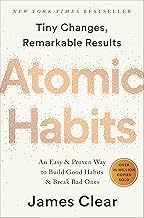
Atomic Habits
Disclosure: This post may contain affiliate links. We only recommend products we believe in, and We may receive a commission at no cost to you! Thank you for your support!
Acknowledgement: Cover Image by moneycatzzz.com
Disclaimer: The information is provided for general information only – moneycatzzz.com makes no representations or warranties in relation to the information, including but not limited to any representation or warranty as to the fitness for any particular purpose of the information to the fullest extent permitted by law. While every effort has been made to ensure that the information provided in this article is accurate, reliable, and complete as of the time of writing, the information provided in this article should not be relied upon to make any financial, investment, real estate or legal decisions. Additionally, the information should not substitute advice from a trained professional who can take into account your personal facts and circumstances, and we accept no liability if you use the information to form decisions.