
 Reading Time: 8 mins #
 This post may contain affiliate links.
Happiness and Resilience Strategies: Science-Backed Methods for Lifelong Success
Embracing science-backed strategies for happiness and resilience can transform personal well-being and professional success. Research from Harvard Business Review suggests that employees who cultivate a positive mindset are 30% more productive, highlighting the profound impact of psychological well-being in the workplace. Rather than just about fleeting emotions, positive psychology is a structured approach to building strengths, enhancing well-being, and unlocking potential in every aspect of life.
Furthermore, studies from Harvard University reveal that practicing gratitude not only boosts emotional and social well-being but may also contribute to greater longevity. With compelling evidence linking these practices to a healthier, more fulfilling life, this article explores the five essential traits that foster happiness and success: optimism, gratitude, resilience, mindfulness, and self-compassion. We’ll delve into how these qualities shape personal and professional growth and provide practical, science-backed strategies to help you integrate them into your daily life for lasting positive change.
Author’s Bio
Lizabeth Johns is a wellness coach who helps people navigate the challenges and opportunities of the online world. She leverages her experience and blogging background to create informative and engaging content on building happiness and resilience.
 Author’s Bio
The 5 Pillars of Positivity: Science-Backed Strategies for Happiness and Resilience
Pillar 1 – Optimism: The Power of Positive Thinking
Optimism is more than just wishful thinking—it is a science-backed strategy that strengthens resilience, enhances well-being, and fuels success. Research from the American Psychological Association (APA) reveals that individuals who maintain an optimistic outlook are likelier to achieve their goals, experience lower stress levels, and enjoy better overall health. In professional settings, optimistic employees tend to set higher goals, demonstrate greater perseverance, and recover faster from setbacks, all contributing to a thriving career.
Here’s how to cultivate optimism in your life using proven happiness and resilience strategies:
- Challenge Negative Thoughts – When self-doubt or negativity creeps in, don’t accept it as truth. Instead, ask yourself: Is this thought realistic? Is it helping or hindering me? Reframe negative beliefs into empowering, action-oriented thoughts that propel you forward.
- Celebrate Your Accomplishments – Acknowledging past successes strengthens confidence and reinforces a positive self-image. Keep a success journal to document your achievements—big or small—and revisit it whenever you need a reminder of your capabilities.
- Visualize Success – Research suggests that mental rehearsal can enhance performance. Spend time picturing yourself overcoming challenges, achieving your goals, and celebrating victories. This practice primes your brain for success and fosters resilience in the face of obstacles.
Actionable Prompt: Cultivating Optimism
Write down three things you feel optimistic about this week. By consciously focusing on the positive, you reinforce a hopeful mindset and lay the foundation for future success.
Inspiring Optimism in Action: Michelle Obama’s Journey of Resilience
Michelle Obama’s journey is a testament to the power of optimism and resilience. As a young student, she faced numerous challenges but remained steadfast in her belief that she could create a better future. Her perseverance led her to graduate from Princeton and Harvard Law School, build a successful career, and support her husband, Barack Obama, throughout his political journey. Despite public scrutiny and setbacks, her optimistic mindset and unwavering resilience helped her become a global role model.
By adopting science-backed strategies and embracing happiness and resilience, you can develop the same mental strength that fuels lasting success.

[“Optimism: The Power of Positive Thinking” – Photo by Ahmed Zayan on Unsplash]
“You cannot control the external circumstances of your life, but you can control the way you choose to interpret them.” – Oprah Winfrey
The Power of Gratitude: A Science-Backed Strategy for Lasting Success and Well-Being
Gratitude is more than just a feel-good emotion—it is a science-backed strategy that fosters happiness, resilience, and success in life and work. Studies show that gratitude enhances mental well-being, strengthens relationships, and boosts job satisfaction. It also contributes to higher optimism and emotional resilience, helping individuals navigate challenges positively.
How to Cultivate Gratitude in Daily Life
Implementing gratitude into your routine doesn’t require a complete lifestyle overhaul—small, intentional actions can profoundly impact.
- Express Appreciation Regularly: Acknowledge those who support you—whether it’s thanking a colleague for their hard work, recognizing your boss’s guidance, or showing appreciation to loved ones. Verbalizing gratitude strengthens connections and fosters a positive environment.
- Keep a Gratitude Journal: Take a few minutes daily to jot down three things you are grateful for. These can be small joys, such as a productive meeting, a kind gesture from a friend, or even a peaceful morning routine. Writing down positive experiences helps reinforce a mindset of gratitude and resilience.
- Savor Positive Moments: Rather than rushing through daily experiences, truly appreciate and immerse yourself in positive moments. Whether it’s enjoying a heartfelt conversation, admiring nature, or relishing a delicious meal, slowing down enhances your ability to feel and sustain gratitude.
Oprah Winfrey’s Success: How Gratitude and Generosity Shaped Her Legacy
A powerful advocate of happiness and resilience strategies, Oprah Winfrey attributes much of her success to gratitude. Despite facing early life struggles, she cultivated a deep sense of appreciation, which helped shape her mindset and career. Oprah has consistently expressed gratitude for her achievements and for giving back—using her platform for philanthropy, education, and mentorship. Her story exemplifies how gratitude fosters stronger relationships, emotional resilience, and a purpose-driven life.
By embracing gratitude, you can increase happiness, build resilience, and cultivate long-term success in your personal and professional life. Start today by identifying three things you appreciate and witnessing gratitude’s transformative power in action.

Pillar 3: Resilience – The Power to Overcome Challenges
Resilience is the ability to adapt, recover, and thrive in adversity. In both professional and personal life, building resilience helps you manage stress, navigate setbacks, and maintain a positive outlook despite challenges.
Science-Backed Strategies to Build Resilience
- Develop Healthy Coping Mechanisms
- Engage in stress-reducing activities such as exercise, meditation, or deep breathing.
- Spend time in nature to enhance mental clarity and emotional well-being.
- Identify personal stress-management techniques that help regulate emotions effectively.
- Embrace a Growth Mindset
- Reframe setbacks as opportunities for growth rather than failures.
- Adopt the belief that effort and perseverance can develop skills and abilities.
- Learn from challenges by analyzing what went wrong and applying lessons to future situations.
- Prioritize Self-Care
- Ensure adequate sleep, a balanced diet, and regular physical activity to support mental resilience.
- Build strong social connections for emotional support during difficult times.
- Set healthy boundaries to prevent burnout and maintain emotional balance.
By integrating these science-backed strategies, you can cultivate greater resilience, reduce stress, and enhance overall well-being, positioning yourself for long-term success.

[“Resilience is the ability to bounce back from adversity” – Picture by AdinaVoicu]
Pillar 4: Mindfulness – The Key to Focus and Well-Being
Mindfulness is being fully present at the moment, without judgment. It enhances focus, reduces stress, and strengthens emotional regulation, improving decision-making and overall well-being.
Science-Backed Strategies to Cultivate Mindfulness
- Practice Mindful Breathing
- Set aside a few minutes daily to focus on your breath, noticing the rhythm of your inhales and exhales.
- Use guided meditation apps or breathing exercises to help anchor your attention to the present.
- Explore Meditation Techniques
- Engage in mindfulness meditation to develop inner peace and awareness.
- Experiment with body scan meditation, loving-kindness meditation, or guided visualizations to find what resonates with you.
- Take Mindful Breaks
- Step away from your tasks and engage your senses—notice your environment’s sounds, scents, and textures.
- Use mindful breaks to reset your focus and boost productivity throughout the workday.
Incorporating mindfulness practices into your routine can enhance clarity, reduce stress, and improve personal and professional resilience.
Pillar 5: Self-Compassion – Kindness Starts Within
Self-compassion is about treating yourself with kindness and understanding, especially during challenging times. It is not self-pity but an acknowledgment of your humanity and imperfections. Those who practice self-compassion tend to experience less stress, recover faster from setbacks, and be less self-critical.
Science-Backed Strategies to Cultivate Self-Compassion
- Practice Self-Forgiveness
- Learn from mistakes rather than dwelling on them.
- Shift your focus toward growth and moving forward.
- Acknowledge Your Emotions
- Allow yourself to experience emotions without judgment.
- Talking to a trusted friend or therapist can help process complicated feelings.
- Use Positive Self-Talk
- Challenge negative thoughts and replace them with supportive and encouraging affirmations.
- Speak to yourself as you would to a close friend needing reassurance.
Benefits of Self-Compassion
- Reduces stress and anxiety
- Strengthens self-esteem and confidence
- Fosters healthier relationships and emotional well-being
Treating yourself with kindness builds emotional resilience and creates a more positive inner dialogue, helping you navigate challenges more effectively.
Dwayne “The Rock” Johnson’s Self-Compassion in Action
Despite his rugged persona, Dwayne “The Rock“ Johnson openly shares his struggles and past failures, encouraging others to embrace their vulnerabilities. His commitment to self-compassion has fueled his growth and strengthened his connection with worldwide audiences.
Cultivating these five pillars of positivity is a continuous journey, not a final destination. Be patient with yourself, celebrate your progress, and enjoy the process of building a happier, more fulfilling life.

[“Self-compassion: Practice Self-Forgiveness” – Photo by Giulia Bertelli on Unsplash]
Integrating the Traits for Flourishing
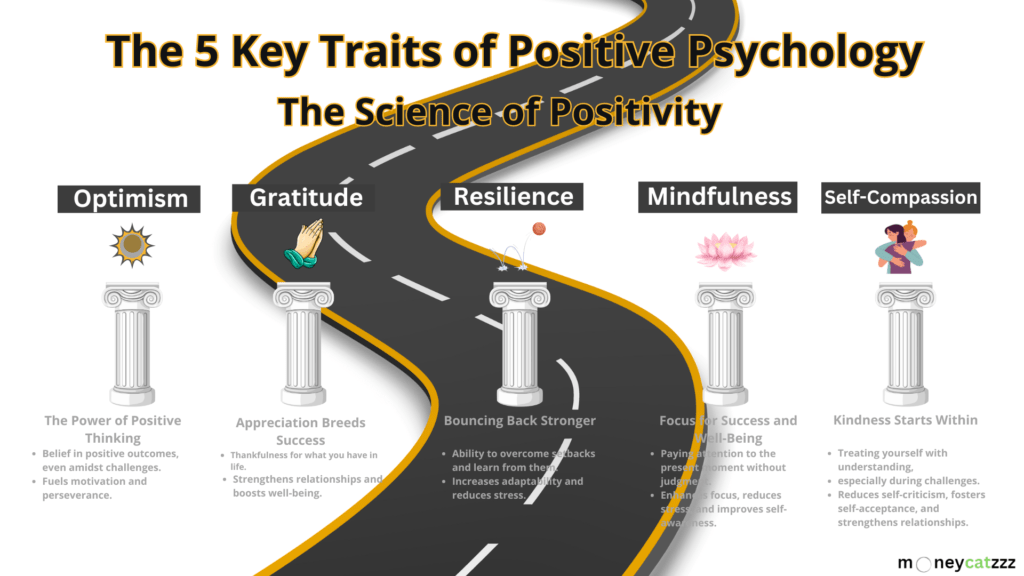
The five core traits—optimism, gratitude, resilience, mindfulness, and self-compassion—do not function in isolation. Instead, they work together to create a strong foundation for happiness, well-being, and success in both personal and professional life.
- Optimism fuels motivation and inspires forward momentum, helping you confidently embrace opportunities.
- Resilience equips you to navigate setbacks, adapt to challenges, and emerge stronger.
- Gratitude fosters positive relationships and contentment, enhancing both workplace and personal connections.
- Mindfulness sharpens focus, improves stress management, and supports productivity and emotional regulation.
- Self-compassion encourages self-acceptance and emotional well-being, helping you cultivate a healthier inner dialogue.
By integrating these science-backed strategies into your daily life, you can develop a more fulfilling, balanced, and prosperous future—one built on the principles of happiness and resilience.
Harnessing the Power of Positive Psychology
By cultivating these traits, you build a positive psychology powerhouse within yourself—one that fosters happiness, resilience, and success. This empowers you to:
- Thrive at Work – Approach challenges with a growth mindset, build strong professional relationships and maintain well-being even during demanding times.
- Cultivate Meaningful Relationships – Express gratitude to loved ones, practice active listening, and show self-compassion, fostering deeper connections and greater intimacy.
- Navigate Challenges with Grace – Bounce back from setbacks, view adversity as a learning opportunity, and maintain a positive outlook even in difficult situations.
- Live a Fulfilling Life – Savor positive experiences, appreciate the present moment, and set goals aligned with your values, leading to a life filled with purpose and happiness.
By intentionally integrating these happiness and resilience strategies into your daily routine, you create a strong foundation for long-term success and well-being in every aspect of life.
[“The 5 Pillars of Positive Psychology” – moneycatzzz.com]
Actionable Steps for Lasting Change
Unlocking the transformative power of positive psychology begins with small, intentional steps. Here’s how to start:
- Start Small – Avoid overwhelming yourself by trying to change everything at once. Instead, choose one or two practices and gradually integrate them into your daily routine.
- Find What Works for You – Experiment with different techniques and discover what resonates most with you. There is no one-size-fits-all approach to personal growth.
- Be Patient & Consistent – Building these traits takes time and effort. Celebrate small victories, stay committed, and remember that setbacks are part of the journey.
Cultivating Happiness and Taking Action
Your happiness and well-being are within your control. By intentionally cultivating positive psychology traits and weaving them into your daily routine, you can unlock your full potential and create a life rich with joy, fulfillment, and success—personally and professionally. Embrace the power of positive psychology and take the first step toward a more flourishing you.
Turn Insights into Action
Now that you understand the key pillars of happiness and resilience, it’s time to put them into practice:
- Create a Personalized Action Plan – Reflect on the character traits that resonate most with you. Choose one or two strategies to incorporate into your daily routine.
- Set SMART Goals – Make your goals Specific, Measurable, Achievable, Relevant, and Time-bound. Example: “I will practice mindful breathing for five minutes each morning for the next week.”
- Track Your Progress – Celebrate even the smallest wins. Use a journal or habit tracker to stay motivated and recognize your growth.
- Seek Support – Share your goals with a friend, mentor, or therapist. Having support and accountability can make a significant difference on your journey.
Taking these intentional steps and consistently practicing science-backed strategies can reshape your mindset, enhance your well-being, and build a future filled with happiness, resilience, and success.
The journey to a happier you begin today—take the first step and start flourishing.

Additional Resources for Deeper Exploration
For those eager to delve further into the science of happiness and resilience, these expert-backed resources offer valuable insights and practical strategies:
Books
- “Flourish” by Martin Seligman – A foundational guide to positive psychology, written by one of the pioneers in the field.
- “The Happiness Project” by Gretchen Rubin – A personal exploration of happiness, filled with actionable tips and exercises.
- “Mindset: The New Psychology of Success” by Carol Dweck – A compelling look at the power of a growth mindset and how it shapes success.
Articles & Research
- Greater Good Science Center – A hub for research-backed articles and strategies on happiness, resilience, and well-being.
- PositivePsychology.com – A comprehensive resource offering in-depth articles and practical tools for applying positive psychology in everyday life.
Online Courses
- Yale’s The Science of Well-Being – One of the most popular courses on happiness and well-being, taught by Yale University, offers science-based techniques for a more fulfilling life.
Exploring these resources can deepen your understanding and provide practical ways to integrate happiness and resilience strategies into your daily life.
Signup to our Newsletter for regular updates:
Disclaimer: The information is provided for general information only – moneycatzzz.com makes no representations or warranties in relation to the information, including but not limited to any representation or warranty as to the fitness for any particular purpose of the information to the fullest extent permitted by law. While every effort has been made to ensure that the information provided in this article is accurate, reliable, and complete as of the time of writing, the information provided in this article should not be relied upon to make any financial, investment, real estate or legal decisions. Additionally, the information should not substitute advice from a trained professional who can take into account your personal facts and circumstances, and we accept no liability if you use the information to form decisions.