
 Reading Time: 6 mins #
 This post may contain affiliate links.
Personal and Professional Growth: Your Journey
Most of us have moments when we feel stuck. We’re craving something more fulfilling, whether in our careers or personal lives, but don’t always know where to begin. That feeling of wanting change but not knowing the next step? You’re not alone. The truth is, personal and professional growth isn’t some mysterious process reserved for a lucky few. It’s something you can build deliberately, one step at a time.
Think of it like training for a marathon. No one expects to run 26 miles without prep—and life’s journey is no different. When you intentionally invest in yourself, you give yourself the tools, confidence, and mindset to rise to challenges and reach your goals.
“The best way to predict your future is to create it.” – Abraham Lincoln (Former US President)
This guide is here to help you do exactly that. It’s not about perfection or following a rigid formula. It’s about finding what works for you, learning to grow through experience, and discovering your potential—at work and in your everyday life.
What Does Growth Mean?
Personal and professional development go hand in hand. When you grow in one area, it often positively impacts the other. To lay a solid foundation, let’s look at four key building blocks that support real, lasting growth:
1. Get Clear on Your Values and Goals
Before making progress, knowing what matters to you is important. What lights you up? What makes you feel proud, alive, or deeply fulfilled?
- Start with self-reflection. Think about your passions and what drives you—at work and in life. Maybe creativity excites you, or you value helping others. Knowing your core values can help steer your decisions.
- Look for alignment. Can your values show up in your career? If you love creativity, for example, maybe you’d thrive in a role that lets you design, write, or innovate.
- Create a mission statement. It doesn’t need to be fancy. Just a few clear sentences about what matters most to you and what you’re aiming for.
Setting Goals That Stick
Once you know what you value, set goals that reflect that, and use the SMART method—Specific, Measurable, Achievable, Relevant, and Time-bound goals.
Break big goals into smaller milestones so they don’t feel overwhelming. For instance, if your goal is to start a new career, your steps include taking an online class, updating your resume, and reaching out to mentors.
Don’t forget the power of visualization. Imagine yourself achieving your goal—how it feels, looks, and what changes. This simple mental exercise can help keep your motivation high.
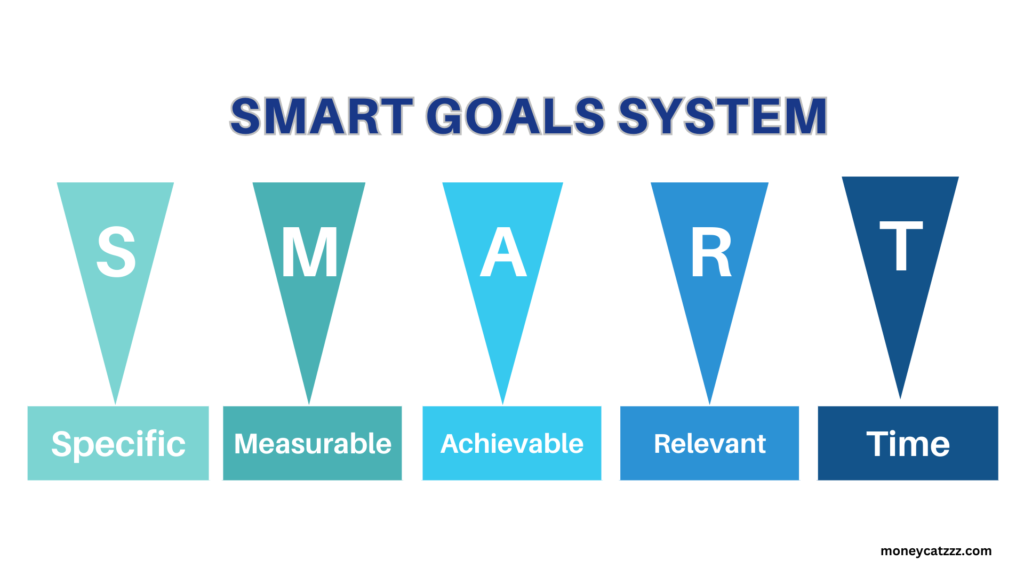
[“SMART GOALS SYSTEM” – moneycatzzz.com]
2. Build Confidence and Communicate Clearly
Self-confidence is like a muscle—the more you use it, the stronger it gets—even the most confident people occasionally deal with self-doubt.
What matters is how you handle those moments.
Quiet That Inner Critic
- Recognize negative self-talk. That voice in your head saying, “I’m not good enough,” or “I’ll mess this up”? It’s not truth—it’s fear. Challenge it with facts and self-kindness.
- Practice self-compassion. It’s okay to make mistakes. Learning to be kind to yourself when things are unplanned is just as important as celebrating wins.
Speak Up with Confidence
Being assertive doesn’t mean being aggressive. It means being honest, transparent, and respectful—whether setting boundaries or sharing ideas.
- Practice active listening. This means being fully present in conversations, asking questions, and making others feel heard—a powerful way to build connection and trust.
- Establish boundaries. Protect your time and energy, both at work and at home. Boundaries are healthy, not selfish.

3. Strengthen Your Emotional Intelligence
Emotional intelligence (EQ) is about understanding your emotions and responding with intention rather than reacting impulsively. It’s a key ingredient in both thriving relationships and professional success.
Get to Know Yourself
- Notice your triggers. What situations or people tend to spark strong emotions? Keep a journal to spot patterns.
- Learn to regulate your reactions. Whether deep breathing, taking a walk, or pausing before responding—develop strategies that help you stay grounded.
Build Better Relationships
Empathy is a superpower. Practice seeing things from other people’s perspectives. Not only will you deepen your connections, but you’ll also be a better teammate, leader, and communicator.
4. Break Through Limiting Beliefs and Adopt a Growth Mindset
We all carry stories about ourselves—some empowering, some limiting. Maybe you’ve told yourself, “I’m not a leader,” or “I always mess things up.” These thoughts can become self-fulfilling if we don’t challenge them.
- Start identifying your limiting beliefs. Where did they come from? Are they based on fact or fear?
- Replace them with empowering truths. For example: “I’m learning and improving every day,” or “I can figure things out.”
Embrace Growth, Not Perfection
Setbacks are Normal—they are not proof of failure but part of the learning process. Focus on progress, not perfection. Celebrate small wins. Every step counts.

[“Embrace a Growth Mindset” – Photo by Helena Lopes on Pexels.com]
Keep the Momentum Going: Practical Tips for Continued Growth
Growth is a journey, not a one-time task. Here are a few ways to keep moving forward:
- Find a mentor or coach: A good mentor can offer insights, advice, and encouragement grounded in real experience.
- Take courses or read: Whether it’s a professional workshop or a book that speaks to your soul, never stop learning.
- Ask for feedback: Honest feedback—especially from people you trust—can be one of the most helpful tools for growth.
- Maintain a work-life balance: Rest and play aren’t optional—they’re essential. Make time for what makes you feel alive outside of work.
- Practice self-care: That includes sleep, nutrition, movement, and doing things that bring you joy. You can’t pour from an empty cup.
Real Talk: FAQs
Q: I keep losing motivation. How do I stay consistent?
A: Set small, realistic goals and build habits around them. Also, revisit your “why.” Motivation is easier to sustain when your goals are deeply connected to what matters most.
Q: I have limiting beliefs but don’t know how to change them.
A: Start by writing them down. Ask yourself, “Is this 100% true?” Usually, it’s not. Then, replace those thoughts with affirmations that reflect your strengths.
Q: How can I develop emotional intelligence?
A: Begin with awareness. Check in with yourself regularly. Notice how emotions affect your actions. Journaling, meditation, and empathy exercises are great tools.
Q: I’m introverted—networking feels exhausting. Tips?
A: Focus on quality, not quantity. Look for small events, one-on-one chats, or online groups where you feel more comfortable. Networking doesn’t have to mean mingling at loud mixers.
Q: How do I deal with perfectionism?
A: Perfectionism often comes from fear. Try shifting your focus to learning and growth—done is better than perfect. You can continually improve later.
Q: Does this journey work for everyone?
A: Absolutely. Your path might look different from someone else’s, and that’s okay. The point is to keep growing, learning, and showing up for yourself.

Wrapping It All Up
Personal and professional development isn’t a destination—it’s an ongoing process. It’s about showing up daily, taking small steps, and giving yourself grace through the ups and downs.
You don’t have to have it all figured out. You have to be willing to start.
So, take that first step today. Whether it’s writing down your values, setting one small goal, or challenging one limiting belief—start there. The rest will follow.
Further Reading (Highly Recommended):
- Mindset: The New Psychology of Success by Carol Dweck
- Emotional Intelligence 2.0 by Travis Bradberry & Jean Greaves
- The 7 Habits of Highly Effective People by Stephen Covey
- StrengthsFinder 2.0 by Tom Rath
Keep growing. Keep learning. And remember—your potential is limitless when you decide to bet on yourself.
Disclosure: This post may contain affiliate links. We only recommend products we believe in, and We may receive a commission at no cost to you! Thanks for your support!”
Acknowledgement: Cover Image by Unsplashed.com
Disclaimer: The information is provided for general information only – moneycatzzz.com makes no representations or warranties in relation to the information, including but not limited to any representation or warranty as to the fitness for any particular purpose of the information to the fullest extent permitted by law. While every effort has been made to ensure that the information provided in this article is accurate, reliable, and complete as of the time of writing, the information provided in this article should not be relied upon to make any financial, investment, real estate or legal decisions. Additionally, the information should not substitute advice from a trained professional who can take into account your personal facts and circumstances, and we accept no liability if you use the information to form decisions.