 Reading Time: 8 mins #
 This post may contain affiliate links.
Multiple Intelligences: Rethinking How We Define Intelligence
For decades, a single test score—the IQ test—has reigned supreme, dictating a person’s intellectual worth. But this rigid standard fails to capture the vast potential within each of us. Howard Gardner’s Multiple Intelligences Theory challenges this narrow view, proposing that intelligence is diverse and multifaceted.
Take me, for instance. History is my domain. I weave captivating narratives from dusty tomes, effortlessly navigating the rise and fall of empires. Yet, complex equations morph into an indecipherable code. Numbers dance a chaotic ballet before my eyes, a stark contrast to the magic I see in the spherical stones of ancient ruins, meticulously stacked one upon another. Formulas and equations trigger a dull ache in my head. My experience, along with countless others, exposes the limitations of this singular metric.
Like many, I’ve felt disheartened by a low IQ score, questioning my intelligence despite excelling in other areas. But intelligence is not a single score—it is a symphony of strengths waiting to be recognized.
In 1983, Harvard psychologist Howard Gardner introduced the world to Multiple Intelligences (MI) Theory, redefining how we perceive human potential. According to this theory, intelligence extends beyond linguistic and logical reasoning, encompassing diverse abilities such as creativity, social skills, and self-awareness.
“We are all able to know the world through language, logical-mathematical analysis, spatial representation, musical thinking, the use of the body to solve problems or to make things, an understanding of other individuals, and an understanding of ourselves. Where individuals differ is in the strength of these intelligences—the so-called profile of intelligences—and in the ways in which such intelligences are invoked and combined to carry out different tasks, solve diverse problems, and progress in various domains.” – Howard Gardner from “Multiple Intelligences Theory:”
By understanding your unique blend of intelligences, you can unlock new avenues for learning, enhance your strengths, and orchestrate your success. Let’s explore how embracing Multiple Intelligences can reshape your personal and financial growth.
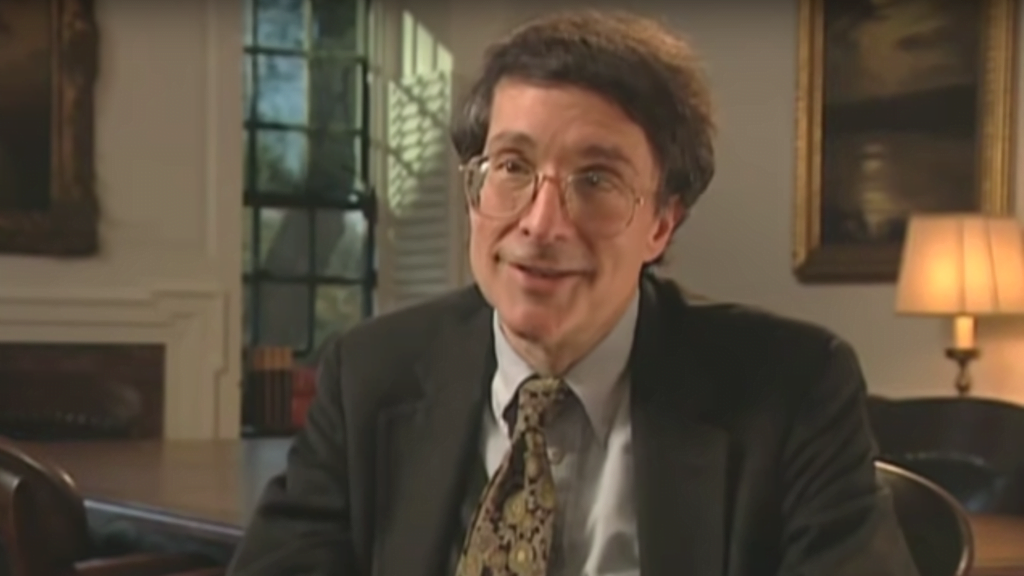
[“Howard E. Gardner and the theory of Multiple Intelligences (MI Theory)” – Source Unknown]
The Myth of the Single Score: Why IQ Isn’t Enough
For decades, intelligence has been narrowly defined by IQ tests, which claim to measure cognitive ability. However, Howard Gardner’s Multiple Intelligences Theory challenges this notion, revealing that intelligence is far more diverse than a single number.
The Limitations of IQ Tests
Research exposes the flaws in relying solely on IQ scores. A study published in Intelligence found that IQ scores account for only 20% of the variance in real-world success. This means that a significant portion of what determines achievement and fulfillment goes untested by traditional IQ measures.
Additionally, IQ tests primarily assess logical-mathematical and linguistic intelligence, neglecting other crucial aspects of human capability. This outdated approach disregards talents in creativity, interpersonal skills, and spatial reasoning—key components of Multiple Intelligences.
Embracing Multiple Intelligences for a Broader Perspective
By recognizing Multiple Intelligences, we expand our understanding of human potential. People excel in different ways—some through movement, others through music, nature, or deep self-awareness. Howard Gardner’s groundbreaking theory provides a more inclusive framework that values diverse abilities beyond logic and language.
Understanding your unique blend of intelligences can unlock new learning strategies, enhance problem-solving skills, and create more significant opportunities for success. The sections will explore the eight intelligences and how they shape personal and professional growth.

Introducing the Multiple Intelligences Symphony: Eight Pathways to Success
Howard Gardner’s Multiple Intelligences Theory proposes that intelligence extends beyond a single score, offering eight pathways to success. Each intelligence represents a unique way of understanding and interacting with the world.
1. Bodily-Kinesthetic Intelligence: Mastery Through Movement
This intelligence involves physical coordination, dexterity, and control. It’s the defining strength of athletes, dancers, and skilled craftspeople. Research from the National Institutes of Health (NIH) found that students with strong bodily-kinesthetic intelligence performed better academically after engaging in physical activity.
2. Visual-Spatial Intelligence: Seeing the World in Patterns
This intelligence is about visualizing and mentally manipulating spatial relationships—a crucial skill for architects, artists, and engineers. Studies published in Learning and Individual Differences reveal that students with strong visual-spatial intelligence benefit significantly from visual learning aids. A prime example is Frank Lloyd Wright, whose spatial intelligence shaped iconic buildings worldwide.
3. Logical-Mathematical Intelligence: The Power of Reasoning
This intelligence focuses on problem-solving, logical reasoning, and numerical analysis. It is the foundation for scientists, mathematicians, and programmers. Studies confirm a strong correlation between logical-mathematical intelligence and success in STEM fields. Marie Curie, renowned for her groundbreaking discoveries, exemplifies this intelligence through her scientific achievements.
4. Linguistic Intelligence: The Art of Communication
This intelligence revolves around language proficiency, storytelling, and effective communication—essential for writers, poets, and public speakers. Research from Clemson University found that individuals with strong linguistic intelligence excel in reading comprehension. A legendary example is William Shakespeare, whose mastery of language inspires generations.
Understanding Multiple Intelligences allows individuals to recognize their unique strengths and tailor their learning experiences accordingly. The following sections will explore the remaining intelligences and how they contribute to personal and professional success.
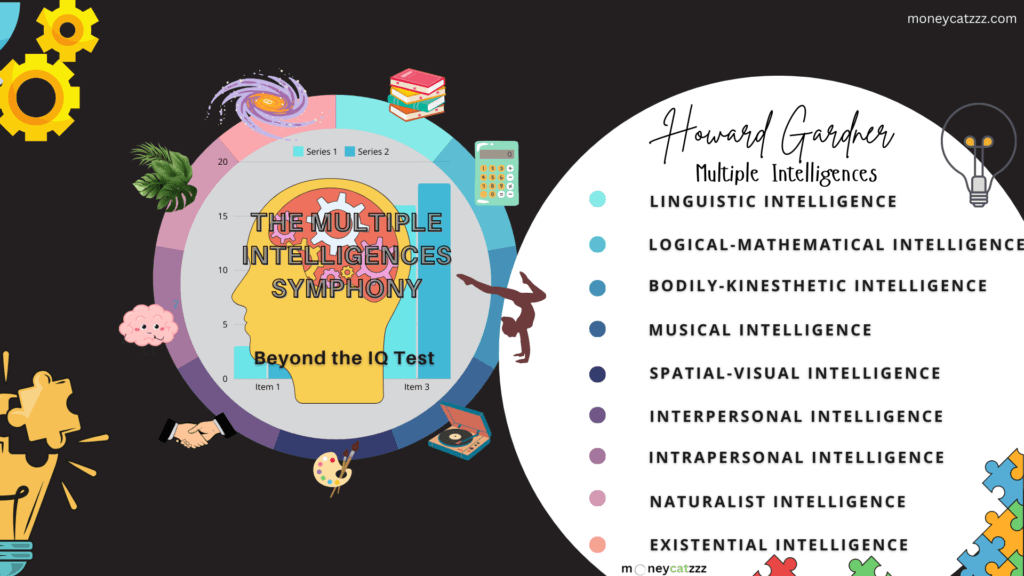
[“Howard E. Gardner ‘s MI Theory” – moneycatzzz.com]
-
5. Musical Intelligence: This form of Multiple Intelligences involves perceiving, performing, and creating music. It’s the talent of musicians, composers, and conductors. Interestingly, research suggests that musical intelligence enhances cognitive function in areas like memory and spatial reasoning. Legendary composer Wolfgang Amadeus Mozart exemplifies this intelligence, inspiring generations with his masterpieces.
6. Interpersonal Intelligence: This involves understanding and interacting effectively with others. It’s the strength of leaders, counselors, and salespeople. Studies have shown that strong interpersonal intelligence is a prime predictor of success in various careers, particularly those requiring teamwork and social interaction.
7. Intrapersonal Intelligence: This intelligence focuses on self-awareness, reflection, and understanding emotions and motivations. It’s a defining strength of philosophers, writers, and deep thinkers. The renowned psychologist Carl Jung is a prime example, as his work delved into the complexities of the human psyche.
8. Naturalist Intelligence involves connecting with the natural world and recognizing nature’s patterns. It’s a defining trait of scientists, conservationists, and outdoor enthusiasts. Charles Darwin, the groundbreaking naturalist, is a perfect example of someone with exceptional naturalist intelligence using his keen observational skills to develop the theory of evolution.
9. Existential Intelligence: Gardner later proposed this ninth intelligence, which involves pondering profound questions about life, death, and meaning. While more challenging to quantify, it plays a crucial role in philosophy, spirituality, and personal introspection.
The Power of Multiple Intelligences
These Multiple Intelligences shape how we learn, interact, and succeed. Understanding your dominant intelligence can unlock new opportunities for personal and professional growth. Whether you excel in logical reasoning, artistic expression, or interpersonal skills, recognizing and developing your strengths can help you reach your full potential.
By embracing the diversity of intelligence, we move beyond traditional IQ measures and foster a richer, more inclusive approach to learning and success.
Finding Your Unique Melody: Identifying Your Dominant Intelligences
Understanding your dominant intelligences is crucial for maximizing your potential. Here are some tips for self-discovery:
- Reflect on your strengths and interests: What activities naturally engage you? What subjects did you excel in at school?
- Observe your learning preferences: Do you learn best by doing, seeing, or listening?
- Take online assessments: Several online quizzes can help you identify your dominant intelligent
- Embrace lifelong learning: Endless resources are available to learn and develop new skills. Online courses, workshops, and even books can help you strengthen your intelligence in any domain.
- Book Recommendation 2: “Mindset: The New Psychology of Success” by Carol Dweck explores the concept of a growth mindset, which is essential for embracing lifelong learning and developing your intelligence. This book emphasizes the importance of viewing intelligence not as a fixed trait but as a capacity that can be cultivated through effort and perseverance.
Criticisms of Multiple Intelligences Theory
While the Multiple Intelligences Theory has reshaped how we perceive intelligence, some critics argue that these intelligences are not entirely distinct but are different expressions of general cognitive ability. The lack of a standardized assessment method also raises questions about its scientific validity.
However, the real power of MI Theory lies in its ability to broaden our understanding of intelligence. Recognizing diverse intellectual strengths fosters self-discovery, inclusive education, and personal growth—elements that a single IQ score cannot fully capture.
Real-World Examples of Multiple Intelligences in Action
IQ tests often fail to capture the full range of human intelligence. The following individuals exemplify how Multiple Intelligences shape success beyond a single test score:
Albert Einstein – Logical-Mathematical & Visual-Spatial Intelligence
Despite struggling in traditional school settings, Einstein‘s genius lay in his ability to visualize complex scientific concepts. His groundbreaking theories in physics stemmed from his exceptional spatial reasoning rather than rote memorization.
Temple Grandin – Visual-Spatial & Bodily-Kinesthetic Intelligence
Diagnosed with autism, Temple Grandin faced academic challenges but excelled in visual-spatial intelligence. Her ability to “think in pictures” led to revolutionary advancements in humane animal handling systems.
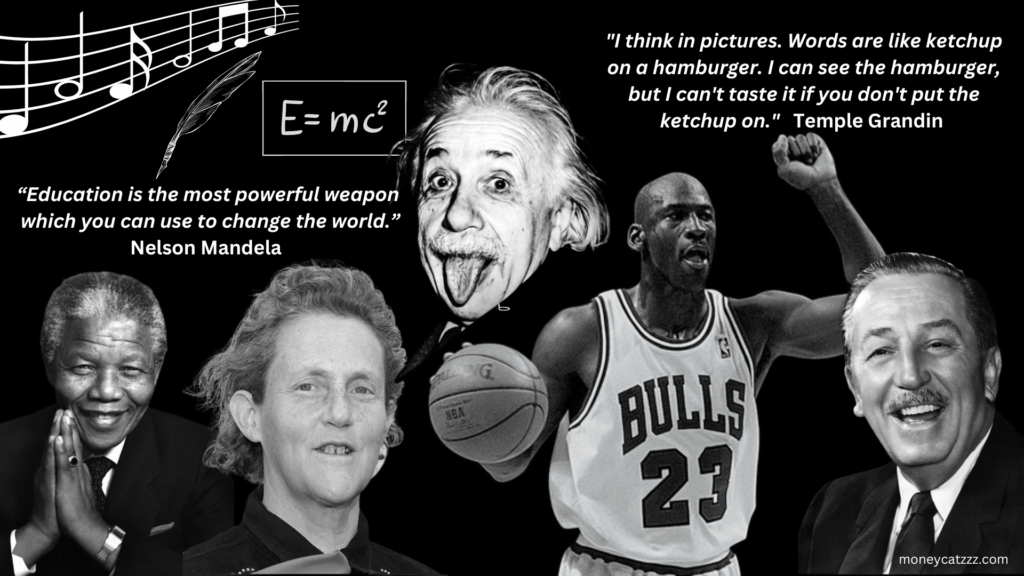
[“L to R: N. Mandela, Temple Grandin, A. Einstein, M. Jordan, and W. Disney” – Sources (Various) moneycatzzz.com]
3. Nelson Mandela (Interpersonal & Intrapersonal):
Nelson Mandela‘s exceptional interpersonal intelligence allowed him to connect with people from diverse backgrounds and lead a successful anti-apartheid movement.
His vital intrapersonal intelligence enabled him to endure years of imprisonment and emerge with a message of forgiveness and reconciliation.
4. Walt Disney (Visual-Spatial & Linguistic):
Walt Disney’s ability to translate his creative vision into captivating stories demonstrates his visual-spatial and linguistic intelligence.
He could envision fantastical worlds and craft compelling narratives resonating with worldwide audiences.
5. Michael Jordan (Bodily-Kinesthetic & Interpersonal):
Michael Jordan‘s dominance in basketball showcased his exceptional bodily-kinesthetic intelligence.
However, his leadership skills and ability to motivate his teammates also highlight his solid interpersonal intelligence.
These are just a few examples of how individuals excel in various intelligences, even if their IQ scores might not have reflected their full potential. You can find more detailed information about these cases and others through online resources:
Project Zero – Harvard University
Greater Good Science Center – UC Berkeley

The Power of Harmony: Developing All Your Intelligences
While you might have some dominant intelligence, neglecting others can limit your potential. The key lies in developing all your intelligence for a well-rounded skillset. Here’s how:
- Challenge yourself: Step outside your comfort zone and explore activities that target your weaker intelligence.
- For instance, if you’re strong in linguistic intelligence, consider taking a drawing class to develop your visual-spatial intelligence.
- Embrace cross-training: Combining your intelligence can unlock new possibilities.
- Entrepreneurs with solid visual-spatial and bodily-kinesthetic intelligence might design innovative products and excel at demonstrations.
- Resources for Further Exploration:
- To delve deeper, explore the following resources:
- Howard Gardner’s website
- A comprehensive article on MI Theory, here.
-
Frames of Mind: The Theory of Multiple Intelligences by Howard E. Gardner
-
Multiple Intelligences: New Horizons in Theory and Practice by Howard E. Gardner
- To delve deeper, explore the following resources:
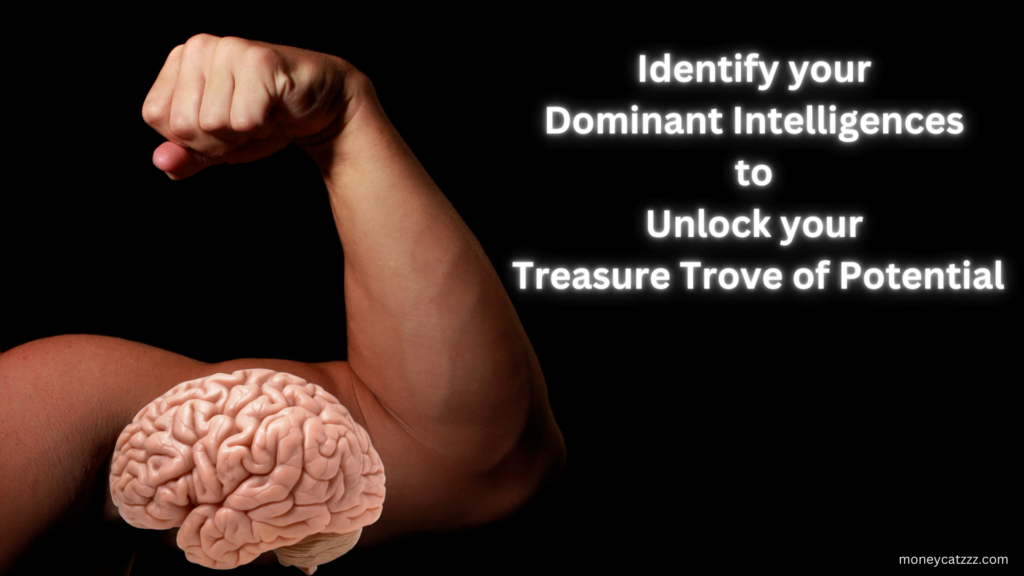
[“Imagine the Possibilities”- moneycatzzz.com]
Conduct Your Success with a Growth Mindset
Howard Gardner’s MI Theory offers a robust framework for understanding human intelligence. By embracing your unique blend of intelligence and nurturing your growth through a growth mindset (as explored in “Mindset” by Carol Dweck), you can unlock your full potential and achieve your personal and financial aspirations.
Remember, your intelligence is not a fixed score but a dynamic symphony waiting to be conducted. Embrace lifelong learning, continue to hone your skills, and orchestrate your own success story. Howard Gardner’s Multiple Intelligences Theory opens the door to a richer understanding of intelligence – a vibrant symphony of strengths waiting to be recognized within each of us.
By identifying your dominant intelligences, you unlock a treasure trove of potential. Imagine the possibilities:
- Linguistic and Interpersonal strengths: Captivate audiences and lead with charisma.
- Logical-Mathematical and Bodily-Kinesthetic strengths: Design innovative products and excel at demonstrations.
- Musical and Visual-Spatial strengths: Compose captivating soundtracks and create visually stunning environments.
The key lies in embracing lifelong learning and fostering all your intelligences. Step outside your comfort zone, explore new activities and challenge yourself to grow.
Disclosure: This post may contain affiliate links. We only recommend products we believe in, and We may receive a commission at no cost to you! Thanks for your support!”
Acknowledgement: Cover Photo by Ben Sweet on Unsplash
Signup to our Newsletter for regular updates:
Disclaimer: The information is provided for general information only – moneycatzzz.com makes no representations or warranties in relation to the information, including but not limited to any representation or warranty as to the fitness for any particular purpose of the information to the fullest extent permitted by law. While every effort has been made to ensure that the information provided in this article is accurate, reliable, and complete as of the time of writing, the information provided in this article should not be relied upon to make any financial, investment, real estate or legal decisions. Additionally, the information should not substitute advice from a trained professional who can take into account your personal facts and circumstances, and we accept no liability if you use the information to form decisions.