
 Reading Time: 8 mins #
 This post may contain affiliate links.
Slow Living means More Living, Not Less
The Sales end at midnight and the “Fitbit” watch is available in my color. Alas, I’ll wait for the next sale. I’ll make a mental note and… wait, why do I need a new watch? My current one tells time perfectly well. A wave of relief washes over you as you hit “close” on the shopping app.
This internal battle—the constant marketing pressure and the urge to keep up—is an all-too-familiar struggle in today’s fast-paced world. Society glorifies busyness, making it easy to fall into the trap of chasing more possessions, achievements, and distractions. But is there another way?
Reclaiming Time in a World That Never Slows Down
Rather than succumbing to the rush, an alternative approach encourages intentionality and balance. It’s not about idleness or isolation but a conscious decision to filter out distractions, prioritize well-being over material gain, and shift the focus from external expectations to personal fulfillment.
By stepping away from the never-ending race, you create space for meaningful moments and a lifestyle that aligns with what truly matters.
“You can’t buy back time.” – Anonymous
Breaking Free from the Busyness Cycle
Modern life is filled with constant demands—looming deadlines, buzzing notifications, and endless social media feeds showcasing picture-perfect moments. The pursuit of more—more success, more possessions, more achievements—has become the norm. But at what cost?
Studies reveal increased stress, information overload, and diminishing quality time. The nonstop influx of messages dictating what to buy, how to live, and what to chase drowns out our inner voice, leaving many overwhelmed and disconnected.
From FOMO to JOMO: Choosing Intentional Living
Rather than succumbing to the fear of missing out (FOMO), a mindset shift towards the joy of missing out (JOMO) offers a refreshing alternative. Intentional living means choosing experiences and relationships that truly add value rather than chasing an unsustainable lifestyle.
One of the most powerful tools in this shift is learning to say “no“—gracefully declining commitments that don’t align with personal values or drain energy. This principle lies at the heart of a balanced and fulfilling life.
Creating Space for What Truly Matters
Embracing a more intentional lifestyle doesn’t require drastic changes. Instead, it’s about aligning daily choices with what brings genuine fulfillment. This philosophy revolves around three core principles:
- Mindfulness – Cultivating awareness of the present moment without judgment.
- Intentionality – Making deliberate choices about how to spend time and energy.
- Minimalism – Simplifying life by focusing on what truly adds value (as laid out by Greg McKeown’s Essentialism).
Applying These Principles to Everyday Life
The slow-living mindset extends beyond leisure—it enhances productivity, relationships, and finances:
- Work Smarter, Not Harder – Implement techniques like the Pomodoro Method to improve focus and efficiency (Cal Newport’s Digital Minimalism). Dedicate uninterrupted “focus time“ to single tasks instead of juggling multiple distractions.
- Prioritize Meaningful Connections – Make quality time with loved ones a priority. Put away devices during meals and conversations to be fully present.
- Master Your Finances – Embrace mindful spending (inspired by Vicki Robin’s Your Money or Your Life). Track expenses, distinguish needs from wants, and consider the actual cost of purchases, including the time spent earning that money. While not the sole focus of slow living, financial freedom can support a more balanced, fulfilling lifestyle.
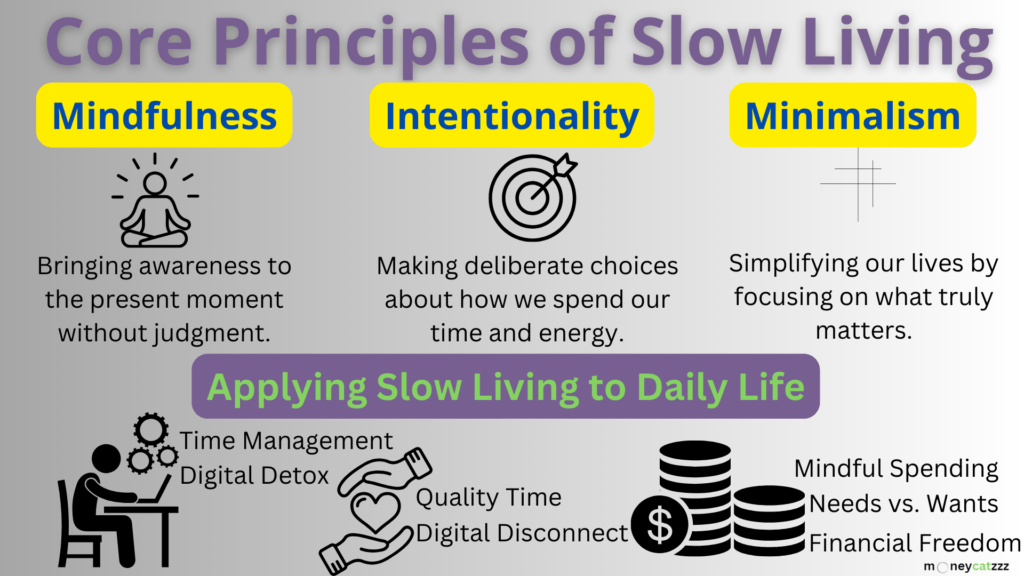
[“Guiding Principles of Slow Living” – moneycatzzz.com]
Technology: Tool or Trap? Embracing Tech While Prioritizing Slow Living
Technology and slow living might seem at odds in a world where screens dominate our daily lives. However, technology can enhance a slow living journey when used intentionally rather than hinder it. From mindfulness apps for meditation and yoga to time management tools that create “slow time” in your day, tech can be a powerful ally in fostering a more intentional lifestyle.
Balancing Tech and Slow Living
The key lies in conscious technology use—setting boundaries to prevent digital overload and distractions. Here are a few ways to integrate tech mindfully:
- Use timers to limit social media browsing and reduce mindless scrolling.
- Create “phone-free” zones in your home, such as the bedroom or dining area.
- Choose apps that promote well-being, like guided meditation or focus-enhancing tools.
- Leverage technology for meaningful connections, such as video calls with distant loved ones, rather than passive social media consumption.
Technology can support your slow-living goals rather than detract from them when used with purpose and moderation.

The Digital Detox: Cutting Out the Noise in a Hyperconnected World
One of the biggest challenges in modern life is the constant influx of notifications, emails, and social media alerts. Slow living encourages regular digital detoxes to regain mental clarity and reduce stress.
Simple Ways to Detox from Digital Overload:
- Set “tech-free” zones at home (e.g., no screens in the bedroom).
- Schedule social media breaks and silence non-essential notifications.
- Replace screen time with mindful activities like reading, journaling, or creative hobbies.
Reconnecting with Nature: A Natural Reset
Spending time in nature is one of the most effective ways to counteract digital overwhelm. Research shows that outdoors reduces stress, boosts mood, and enhances overall well-being. Consider integrating these nature-focused slow-living habits:
- Take daily walks in a park or garden.
- Plan weekend hikes or outdoor adventures.
- Try gardening as a mindful, grounding practice.
By reducing digital noise and embracing nature, you create space for calm, clarity, and a more fulfilling, slow-living lifestyle.
Minimalism and Slow Living: A Complementary Approach
While slow living focuses on experiences and well-being, it naturally aligns with the principles of minimalism. Minimalism emphasizes simplifying life by reducing physical possessions and eliminating clutter. Both philosophies advocate a shift from consumerism to focusing on what truly matters.
Minimalism is a powerful tool to facilitate slow living, freeing up time and mental space previously consumed by managing excess belongings. Imagine decluttering your living space—removing unnecessary possessions reduces stress and creates a calm, intentional environment that fosters mindfulness and relaxation, both fundamental to a slow-living lifestyle.
Reaping the Rewards of Slow Living
Embracing slow living isn’t just about reducing stress—it fosters a more intentional, fulfilling life. Here’s how adopting this mindset can positively impact different aspects of your life:
- Increased Productivity & Focus – You can concentrate profoundly and work more efficiently without constant distractions.
- Improved Well-being & Reduced Stress – A slower pace allows your mind and body to recharge, lowering stress and boosting overall energy.
- Enhanced Creativity & Problem-Solving – Stepping away from overstimulation fuels creativity and encourages innovative thinking.
- Stronger Relationships & Deeper Connections – Being fully present nurtures meaningful interactions and strengthens personal bonds.
- Financial Freedom & Mindful Spending – Prioritizing essentials over excessive consumerism fosters economic stability, helping you make more intentional financial decisions.
- A Sense of Purpose & Fulfillment – By aligning your lifestyle with your core values, slow living enables you to find greater satisfaction in daily life.
By shifting away from the “busy trap,” you gain clarity, balance, and control, allowing you to focus on what truly matters.
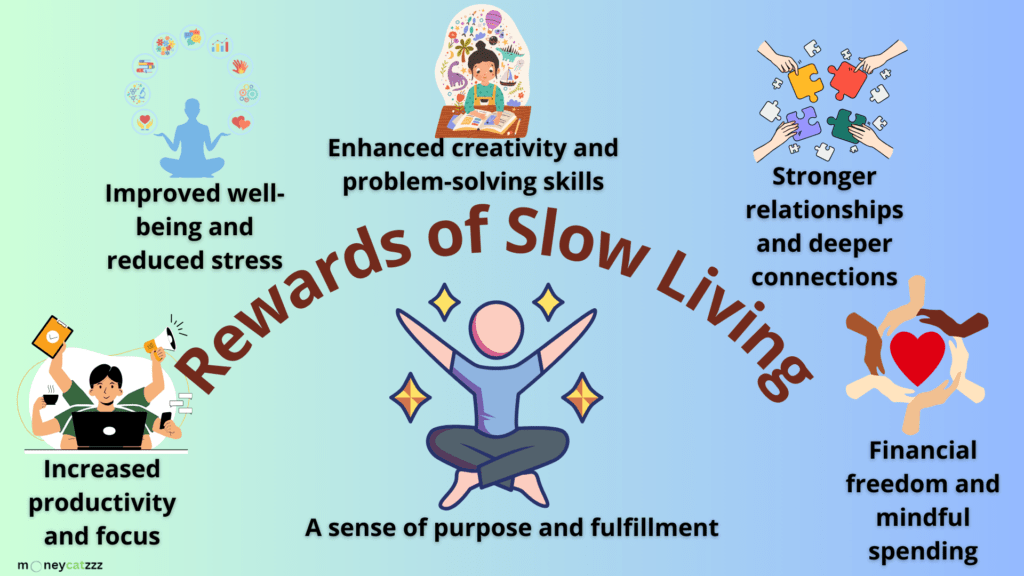
[“The Benefits of Slow Living” – moneycatzzz.com]
The Allure of Ambition vs. the Power of Slow Living
There’s a common belief that embracing a slower pace means giving up on ambition, but that’s far from the truth. Ambition fuels progress and growth, yet it can lead to burnout, stress, and a lack of fulfillment when pursued relentlessly. The real challenge lies in striking a balance—achieving without overextending, striving without sacrificing well-being.
Rather than seeing ambition and slow living as opposing forces, consider them complementary elements. You can set meaningful goals while prioritizing rest, reflection, and personal well-being. Intentionality is key—choosing when to push forward and when to pause. This approach fosters sustainable success, ensuring that achievements are fulfilling rather than draining.
Imagine a life where your aspirations don’t come at the cost of constant exhaustion. Slow living encourages a mindful approach, helping you focus on what truly matters. It’s not about doing less—it’s about doing what aligns with your values at a pace that allows you to thrive. By embracing this philosophy, you can pursue your ambitions with clarity, purpose, and renewed energy.
Celebrity Case Studies: Embracing Slow Living Despite the Spotlight
Slow living isn’t just for those outside the public eye. Many well-known figures have embraced its principles, proving that a simpler, more intentional life can enhance success rather than hinder it.
Emma Watson: Prioritizing Growth Over Hustle
The renowned actress and activist stepped away from Hollywood to focus on personal growth, education, and advocacy. She showcases that ambition and slow living can co-exist by embracing mindfulness and championing sustainable living. Watson’s decision to pause and reflect has allowed her to return to projects with renewed purpose and energy.
Chris Hemsworth: Finding Balance Through Nature
Despite his fast-paced career, the Thor actor prioritizes family time and outdoor adventures. Whether hiking, surfing, or simply stepping away from technology, Hemsworth incorporates regular digital detoxes to stay grounded. This approach to slow living enhances creativity, reduces stress, and improves overall well-being.
Keanu Reeves: Simplicity and Purpose-Driven Living
Keanu Reeves is often cited as an example of minimalist, mindful living. Despite fame, he opts for a modest lifestyle, frequently using public transport and contributing generously to charitable causes. He embodies the essence of slow living by avoiding excess and focusing on meaningful pursuits.
Adele: Stepping Back to Recharge
The Grammy-winning singer took a hiatus from the spotlight to prioritize family and self-care. Adele has openly spoken about avoiding burnout and ensuring that when she creates music, it is with authenticity and passion rather than pressure.
These celebrity examples demonstrate that slow living is not about doing less—it’s about doing what matters most. By setting boundaries, prioritizing well-being, and embracing a mindful, intentional lifestyle, even those in high-pressure environments can reap the rewards of a slower pace.
Slow Travel: Embracing the Journey with a Slow Living Mindset
Travel offers a profound way to gain new perspectives and foster personal growth. However, the pressure to “see it all” often leads to rushed itineraries that leave little room for genuine experiences. Slow Living encourages a different approach—slow travel, where the focus shifts from ticking off attractions to immersing yourself in a place’s culture, people, and essence.
Slow travel allows you to savor the journey rather than racing from one landmark to another. Imagine strolling through hidden alleyways, discovering a quiet café where locals gather, or engaging with artisans to learn their craft. Instead of a fleeting visit, you connect deeply to your surroundings, creating meaningful and lasting memories.
By prioritizing quality over quantity, slow travel transforms how you experience the world—aligning perfectly with the principles of Slow Living.

[“The Art of Slow Living” – Photo by KATRIN BOLOVTSOVA]
Making Slow Living Work for You: A Practical Approach
Slow Living is not about reaching a fixed destination—it’s an ongoing journey of intentionality, mindfulness, and balance. Setbacks are inevitable, but embracing them as part of the process will help you build a sustainable, slow-living lifestyle. Here’s how you can overcome challenges and stay committed:
- Start Small – Incorporate simple, achievable practices, like creating phone-free zones or setting aside time for mindfulness meditation (as outlined by Eckhart Tolle’s The Power of Now). Small wins pave the way for lasting change.
- Find Your Tribe – Surround yourself with like-minded individuals who support your slow-living goals. Join online communities, local meetups, or discussion groups to connect and share experiences.
- Practice Self-Compassion – Slow Living isn’t about perfection but progress. Don’t let occasional setbacks derail you. Forgive yourself, refocus, and keep moving forward.
- Shift Your Perspective – Instead of worrying about what you’re missing out on, focus on the peace, fulfillment, and clarity that come with living more intentionally.
By personalizing Slow Living to fit your unique lifestyle, you create a rhythm that aligns with your values and enhances your well-being.

Embrace the Slow Life: A Journey to Fulfillment
The relentless pursuit of more can leave you feeling drained and disconnected. Slow living offers a different path—not about doing less, but about living with greater intention. By shifting your focus from accumulating possessions to cherishing experiences, prioritizing well-being, and nurturing meaningful connections, you create space to reclaim your time and rediscover yourself.
Imagine waking up feeling truly rested, savoring a quiet morning without the rush, and sharing a meal with loved ones, free from digital distractions. Picture pursuing your passions with clarity and presence, knowing you have the energy to embrace each moment. Slow living isn’t about retreating from life—it’s about engaging with it entirely, leading to deeper fulfillment and lasting joy.
Slow Living: Crafting Your Path
Slow living isn’t a rigid formula but a profoundly personal journey. The key is to explore and adapt the strategies that resonate with you, shaping a lifestyle that aligns with your values and aspirations. Whether simplifying your digital habits, fostering deeper connections, or embracing mindful travel, every small step brings you closer to a more intentional and fulfilling life.
Imagine reclaiming control over your time, reducing distractions, and immersing yourself in experiences that enrich your life. Engaging with a like-minded community, exploring new destinations at a slower pace, and prioritizing moments of stillness can all contribute to this transformation. By choosing slow living, you’re not giving anything up—you’re creating space for more peace, purpose, and fulfillment. Embrace the journey, celebrate your progress, and discover the joy of a life with intention.
Disclosure: This post may contain affiliate links. We only recommend products we believe in, and We may receive a commission at no cost to you! Thanks for your support!”
Acknowledgement: Cover Image by Pexels.com
Signup to our Newsletter for regular updates:
Disclaimer: The information is provided for general information only – moneycatzzz.com makes no representations or warranties in relation to the information, including but not limited to any representation or warranty as to the fitness for any particular purpose of the information to the fullest extent permitted by law. While every effort has been made to ensure that the information provided in this article is accurate, reliable, and complete as of the time of writing, the information provided in this article should not be relied upon to make any financial, investment, real estate or legal decisions. Additionally, the information should not substitute advice from a trained professional who can take into account your personal facts and circumstances, and we accept no liability if you use the information to form decisions.